
Some of the links in this post are affiliate links. If you use the link to make a qualifying purchase, I'll make a small commission at no extra cost to you. As always, thanks for being here!
While it’s understandable to have concerns about backpacking or long-term travelling with diabetes, I believe it shouldn’t hold anyone back from having an epic adventure!
I’ll never forget the amazing, lifelong memories I made on my first backpacking trip back in 2018.
A year-long working holiday in Australia turned into 15 months of travelling through Bali, Australia, New Zealand, the USA, Mexico, Cuba, and Spain before returning home.
However, as a type 1 diabetic I’ll also never forget the concerns and questions that swirled around my head before I was anywhere near the departure lounge of the airport!
Questions like, how do I travel with insulin that needs to be refrigerated? How can I get more insulin and supplies while abroad? Would I be able to get travel insurance to cover me for such a long trip?
Honestly, I struggled to get full answers to all of my questions but I took the leap anyway – as daunting as it was.
Now, more than six years later I’ve fallen in love with backpacker travel, been on many extended trips, and I am now a digital nomad spending most of my time abroad.
I now want to help fellow diabetics get the information and answers they need to have the confidence to travel for an extended period and enjoy the epic experiences that come with travelling!
So, in this article I’ll draw on my personal first-hand experience and share the best tips I have for making long-term travel with type 1 diabetes as stress-free as possible!
1. Carry Unopened Insulin In A TSA-Approved Portable Travel Fridge
The very first concern I had with travelling for longer than one month was how I would keep my unopened insulin cold when travelling between accommodations and fridges.
Because, as we all know, unopened insulin needs to be stored at fridge temperature.
Many of my backpacking trips have involved travelling to new places every few days, often involving some long travel days. And this means a lot of time spent out of the fridge for my insulin.
And the idea of medication that keeps me alive going off while thousands of miles from home was far from ideal. Actually, I would say it was a pretty scary thought.
However, thankfully these days I, nor you, have to take this chance as there are now portable travel fridges specifically designed to keep insulin and other refrigerated medication at fridge temperature while travelling!
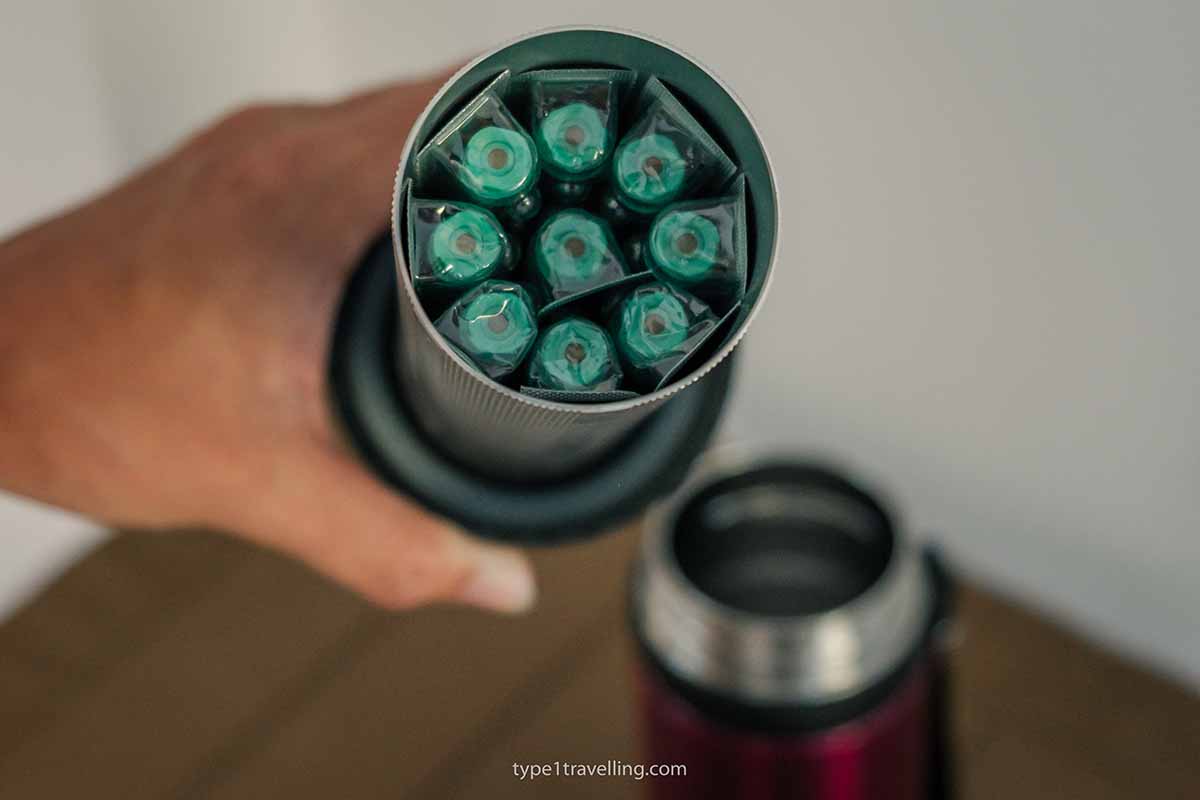
I use 4AllFamily’s Voyager travel fridge which is a game-changer for the diabetic community! The USB-powered portable fridge not only keeps my insulin safe on travel days but the practical and compact design is perfect for saving space while storing a decent supply of insulin!
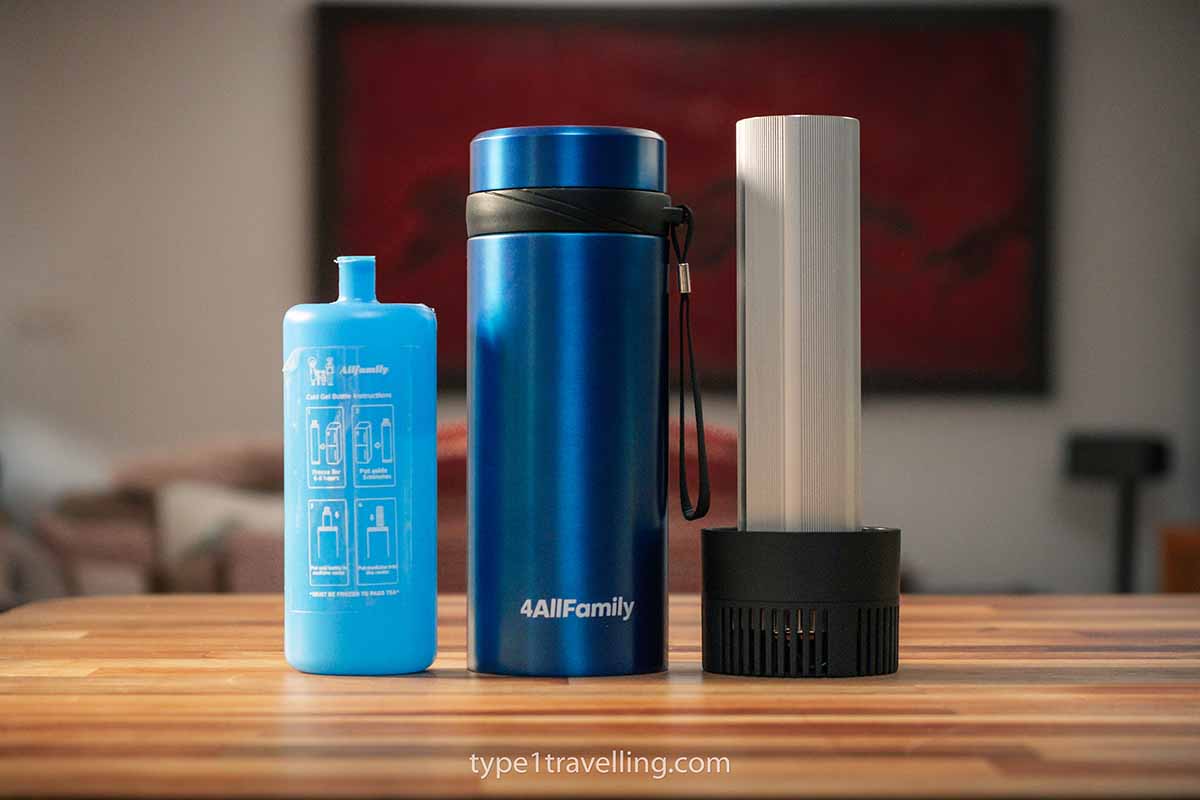
In one Voyager fridge I can pack a 3-4 month supply of insulin cartridges.
The Voyager also takes the pressure off of another challenge of long-term travelling with diabetes – always finding accommodation and hotel rooms with fridges. Just plug it into a wall socket and you have a continuously running mini-fridge keeping your insulin between 2-8°C at all times!
It’s also TSA-approved so you don’t need to worry about taking it through airport security.
An incredible device for diabetics that comes with me on all of my trips!
2. Make Sure To Have Adequate Travel Insurance
Having travel insurance is essential on any international trip, but even more so when you are long-term travelling. This is because the longer you are away, the higher the probability that you might need to use it.
We all hope we won’t need it but you can’t take the chance of travelling without it!
However, when you have diabetes you also need to make sure that you choose a provider that covers pre-existing medical conditions. This term groups together diabetes and other medical conditions from a travel insurance perspective.
Unfortunately, not all travel insurance companies provide cover for pre-existing conditions.
And annoyingly, even less provide policies that cover pre-existing conditions AND backpacker travel involving multiple destinations for a period of longer than 90 days.
Oh, and while being affordable too!
Yes, diabetes normally comes with a premium (it’s just the way it is), but many of us can’t afford to be forking out ridiculous amounts of money on this part of travel.
As a result, I’ve spent many hours researching providers that tick all of the above boxes over the years, and thankfully I’ve found a travel insurance company that’s ideal for diabetic backpackers!
True Traveller is a highly rated and trusted travel insurance provider who can give us long-term cover for an affordable price! They’ve been my go-to insurance for all of my trips since 2023 and I wouldn’t hesitate to recommend them to other travellers – diabetic or not!

3. Plan Where To Top Up Your Diabetic Supplies
A practical challenge of long-term travelling with diabetes is lugging around several months’ worth of insulin and other supplies.
I know this pain all too well – which usually hurts my shoulders the most!
But a limited medication supply doesn’t have to limit the length of your trip.
If you can’t carry enough diabetic supplies to cover your full trip, it just means you have to get more while you’re abroad.
And I’d recommend planning this before your trip starts if you can. This will help to reduce stress by having a good idea of the destinations in which your supplies are available and affordable.
Some steps that I do to research where to top up my insulin and other supplies are:
- Ask your healthcare team if they have advice about the healthcare system in the countries you’re visiting.
- Email your medication manufacturer (e.g. Novo Nordisk) for advice on the availability, cost, and process of accessing it in the countries you’re visiting.
- Contact the diabetes association of the countries you’re visiting for advice on how to access insulin, test strips, CGMs etc in their country as a foreign national.
- Check online forums for other people’s experiences.
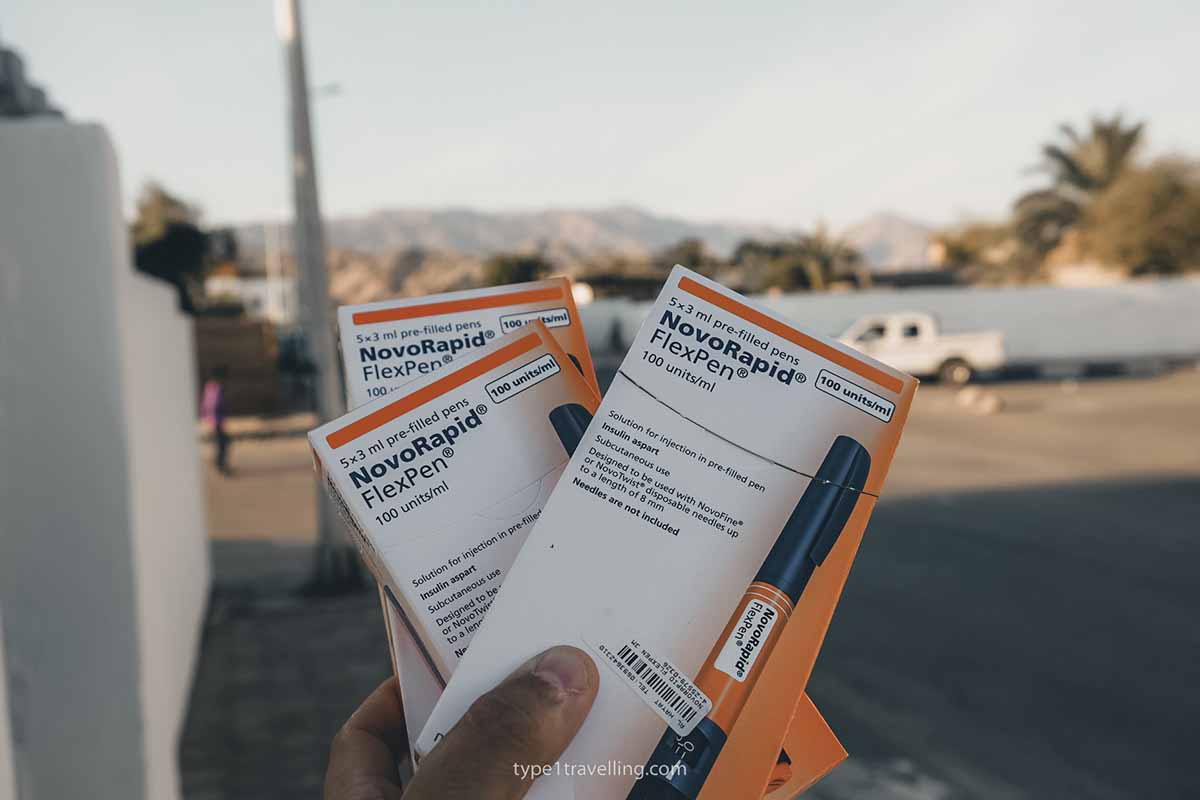
For some countries, it may be as simple as finding a pharmacy with your insulin and purchasing over the counter. I managed to do this in Vietnam, Malaysia, and Egypt.
However, for others, you may need to see a doctor to obtain a local prescription first. This was the case when I was in Australia.
From experience, I can tell you that researching where to get more supplies before your trip starts will save you some frantic, last-minute searching when the time comes!
Related Post: How to Get Insulin Abroad
4. Track Your Medication Usage Before Starting Your Trip
A slightly tedious but effective way to help with the management of your diabetic supplies when travelling is to track how much you use.
I mean, we all (kind of) have a rough idea of how much insulin, needles, test strips etc., we use, but having an accurate record will allow you to get a much better idea of how much of a supply to get before you go, how long it will last, and when you will need to get more.
As well as making sure that you have enough supplies with you, tracking your usage will also help to make sure you don’t carry around an excessively large amount too!
The space and weight of your luggage are far too important to be waste when travelling long-term!
5. Research Reciprocal Healthcare Agreements
Speaking of tedious things – an important part of being a ‘good’ diabetic is making sure your routine blood, eye, feet, and other tests are kept up to date.
Depending on how long you’ll be abroad, you may not need to worry about this. But if you’re going to be away for, let’s say over a year, it’s wise to be thinking about getting these tests done during your trip.
And if your country has a reciprocal health agreement with any of the countries that you’ll be visiting, this would be a good place to get your tests done as it usually means the cost will be cheaper. So I’d recommend researching if your country has reciprocal healthcare agreements before you go.
If you find that your country does have reciprocal healthcare agreements, I’d also check what’s covered, what you’ll need to pay for, and what documents you’ll need to receive healthcare.
For other UK residents like me, you can find a list of UK reciprocal healthcare agreements on the government website.
I found out first-hand how convenient this can be during my one-year working holiday in Australia. Their reciprocal healthcare agreement with the UK meant I could sign up to Medicare and NDSS (Australia’s healthcare system and diabetes service scheme) and get access to GP appointments and medication prescriptions at the same rate as Australian residents.
This not only saved me a lot of money on insulin and test strips but also meant I was able to get my routine tests done. The doctors I saw in Australia were extremely helpful and really encouraged me to get these done.


6. Protect Insulin From Extreme Temperatures With An Insulin Cooling Pouch
It’s not only unopened insulin that we need to store at the correct temperature – also our in-use insulin.
And this should be kept at room temperature, which becomes more difficult when travelling to hot destinations.
I’ll admit I’ve been lazy with this in the past but I found out first-hand, also while in Australia, that hot temperatures can ruin insulin. I accidentally left my insulin in my car which turned into a hot box in the summer heat and proceeded to cook my NovoRapid insulin!
Hello cloudy and funny-smelling insulin that no longer worked.
Now, to keep my in-use insulin safe, I use another of 4AllFamily’s insulin coolers – The Chiller cooling case. This pocket-sized pouch is activated simply by soaking in water and keeps my insulin cool for up to 45 hours!

You don’t have to worry about freezing any ice packs which makes it perfect for day trips, hiking adventures, and relaxing beach days.
As a lover of hot climates, the Chiller is the ideal travel companion and comes with me on all of my adventures!
> Click to Grab your Chiller insulin pen cooler – Use code TYPE10 for 10% off
7. Don’t Store Your Diabetic Supplies In Your Hold Luggage
It’s common knowledge that we shouldn’t pack our diabetic supplies in luggage that will be put in the aeroplane hold. This is because insulin can freeze and baggage can be lost or delayed.
However, it is also good practice to follow this when taking other forms of transport too. Bus and train journeys (sometimes long or overnight ones) are part of backpacker travel, and while it’s not common, it’s also not unheard of for people to get off a night bus bleary-eyed to find that their backpacks have been taken from the hold.
I’ve even heard stories of people’s belongings being stolen from the overhead compartment above them on buses when I was in Mexico.
Of course it would be far from ideal to have your backpack containing all your clothes or expensive electronics stolen, but it would be disastrous if all your diabetic supplies were in there too.
This isn’t to say anything bad will happen, it’s just a reminder to be vigilant and take precautions with your luggage and diabetic supplies.
8. Check How Much Medication You Can Take Into The Countries You’re Visiting
Something that is easy to overlook when travelling with diabetes is checking how much medication you are allowed to bring into the countries you’re travelling to.
It’s easy to overlook because to us, travelling with insulin is normal practice and why would we give it a second thought? It’s not a substance that we would typically think of as abused, dangerous, or addictive.
However, in various countries (such as Australia and the United Kingdom) insulin is a prescribed medication and there may be a limit on how much of a supply you can take into the country.
Therefore, if you’re travelling with a large supply of a few months or more, it’s important to check for any restrictions before you travel.


9. Tell Accommodations You Have Insulin
Another tip I picked up early on in my diabetic travel adventures is to make the accommodations you’re staying in aware of your insulin.
This is helpful for a couple of reasons.
First, if I’ve booked a room with a fridge, I make a request in the booking that I will use the fridge to store my insulin which makes sure that it will be plugged in and ready for when I check-in. This means there will be no delay in getting insulin transferred straight into the fridge.
Second, if using a shared fridge in a guesthouse or hostel, it’s a good idea to make reception staff and workers aware that you’ve got insulin stored in the fridge. This ensures that they know it’s important to be stored in the fridge and not the freezer, and also that they won’t throw it away if they have a fridge clear out – which can happen weekly in hostels.
I also label my insulin as refrigerated medication if storing it in a shared fridge, just as another precaution.
10. Consider Wearing A Form Of Medical ID
Wearing a medical ID is a proactive step you can take to make sure you receive appropriate medical care should you ever need it.
I know many people don’t like the idea of wearing a medical ID bracelet or necklace – and honestly, I don’t wear one when I’m at home in Scotland. However, it’s a good idea to wear one when you’re travelling abroad, especially when it’s for a long period.
The medical ID emblem, which is known as a Caduceus, is universally recognised and will alert first responders and medical professionals wherever you are that you have a condition. It’s also advisable to add type 1 diabetes to your medical ID so they know that you are diabetic and can treat you accordingly.
It’s the same concept as travel insurance – you hope you will never need it, but the longer you’re away the higher the probability that you might.
11. Translate Useful Diabetes Phrases
As well as greetings, numbers, and common phrases, translating diabetes-related vocabulary into the language of the countries you are travelling to can be useful.
Whether you’re trying to buy insulin or test strips from a Vietnamese pharmacy, or trying to explain to your guesthouse host in Colombia that your insulin needs to be kept in the fridge and not the freezer – the language barrier can be an issue.
Words and phrases such as type 1 diabetes, insulin, blood sugar, refrigerator, and freezer are some examples that can come in handy to have translated.
I usually write a list in the notes app of my iPhone and add it to my “official documents’ folder along with digital copies of my passport, prescription, doctor’s letter, travel insurance details, and other important travel documents.
This way, everything is organised and easy to find whenever I need it.


Frequently Asked Questions
How Can I Travel Abroad And Get The Same Insulin There?
Reach out to your insulin manufacturer to find out if your insulin is available in the country you’re travelling to and whether you can purchase it over the counter or if you require a local prescription.
What Is The Best Way To Carry Insulin When You Travel Long Distances?
To keep insulin at fridge temperature when travelling long distances, it’s best to carry it in a portable travel fridge.
To Finish
I hope this article helps to ease some of the concerns that come with travelling long-term as a diabetic and gives you the confidence to take that trip!
With some extra planning, organisation, and effort I truly believe that diabetes shouldn’t hold anyone back from experiencing the epic adventures that backpacker travel brings!
Pin It For Later!

More Travel and Diabetes Guides
Check out some of my other Travel and Diabetes blog posts which are full of helpful information and my personal experiences!
